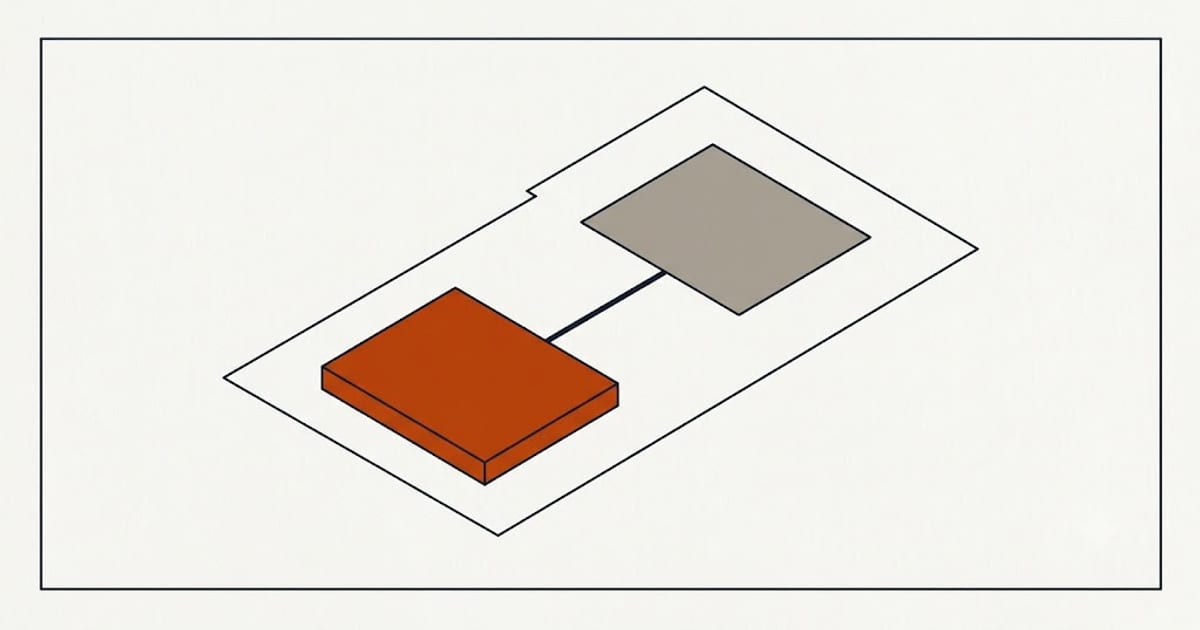
Air conditioning ratings — SEER2, EER2, HSPF2 and rated capacity — are produced by testing a specific combination of outdoor unit, indoor coil and air handler or furnace.
The certificate
AHRI, the Air-Conditioning, Heating, and Refrigeration Institute, maintains a public directory of certified combinations. Each carries an AHRI Certified Reference Number.
That number identifies the exact model numbers tested together and the performance they produced. It is the only evidence that a proposed system will deliver what a quote claims.
Ask for it on every quote. It is a single line, it is free, and it can be looked up independently.
What goes wrong without it
Condenser-only replacement. The most common case. The old indoor coil has a different circuiting, a different face area and often a different metering device. The combination was never tested and it will not deliver the rated efficiency or, frequently, the rated capacity.
Mismatched tonnage. A three-ton coil with a three-and-a-half-ton condenser is a real product configuration in some cases and a mistake in others; the directory is what distinguishes them.
Refrigerant mismatch. Equipment for R-410A and equipment for R-454B or R-32 are not interchangeable, and the metering devices and coil designs differ.
Why a condenser-only job is sometimes proposed
It is cheaper, and it is sometimes genuinely reasonable — when the indoor coil is recent, matched, and in good condition.
It becomes a problem when the coil is old, when it was matched to the previous refrigerant, or when the quote presents the outdoor unit's rating as the system's rating.
The question to ask is simply: what is the AHRI reference number for the combination you are proposing to leave in place.
The refrigerant transition makes this sharper
As new equipment moves to lower-GWP refrigerants, the pool of legitimate matches with older indoor components shrinks to nothing.
A new R-454B condenser cannot be matched to an R-410A indoor coil at all. During the transition this is the single most common source of confusion in quotes, and the certificate resolves it immediately.
What else the certificate gives you
Rated cooling capacity at the standard rating point, which is what the load calculation is being compared against — and which is frequently not the same as the nominal tonnage on the box.
Sensible and latent split, which is what determines whether the system will control humidity in a humid climate.
Heating capacity for a heat pump, though the extended low-temperature table has to be requested separately from the manufacturer.
Nominal tonnage is a label, not a measurement
A "three-ton" unit may be rated at 34,000 or 36,600 BTU/h depending on the model and the matched coil.
When a load calculation lands near a size boundary, this matters. Selecting against nominal tonnage rather than against the certified capacity is how a system that was supposed to be at 105% of load ends up at 118%.
Warranty and registration
Manufacturers generally require a matched system for warranty coverage, and generally require registration within a set window after installation for the extended parts warranty.
Both are ordinary and both are frequently missed. Confirm the registration was submitted, and keep the AHRI number, the model and serial numbers, and the commissioning data together — that set of documents is what any future contractor will need.
Looking it up yourself
The AHRI directory is public and searchable by manufacturer and model number.
Entering the outdoor unit, indoor coil and air handler model numbers from a quote returns the certified combination if one exists, along with its rated capacity and efficiency. A combination that does not appear has not been certified, and that is the answer to the question.
It takes a few minutes and it is the single most useful independent check available to a homeowner comparing quotes.
The line set counts too
Refrigerant line length and diameter affect capacity. Manufacturers publish maximum equivalent lengths and charge adjustments, and a run substantially longer than the standard test conditions loses capacity.
On a long run — an attic air handler with the condenser at the far corner of the house — this is worth raising, because the certified rating assumes a standard installation.