The upgrade from 14 to 16 SEER is sold as an efficiency decision. It is really an arithmetic one, and the arithmetic depends far more on where you live than on the equipment.
What SEER actually promises
SEER is cooling output divided by electricity input across a season. Going from 14 to 16 is a 14% reduction in the energy used for cooling — not 14% off the electricity bill, and certainly not 14% off the whole utility bill.
So the saving is 14% of the cooling portion of your electricity spend. That number is the whole question.
Where the answer changes
| Climate | Cooling hours/year | Cooling spend | 14% saved | Payback on ~$1,200 |
|---|---|---|---|---|
| Phoenix, zone 2 | ~2,500 | ~$1,400/yr | ~$196/yr | ~6 years |
| Atlanta, zone 3 | ~1,600 | ~$800/yr | ~$112/yr | ~11 years |
| Chicago, zone 5 | ~700 | ~$350/yr | ~$49/yr | ~24 years |
| Minneapolis, zone 6 | ~500 | ~$240/yr | ~$34/yr | ~35 years |
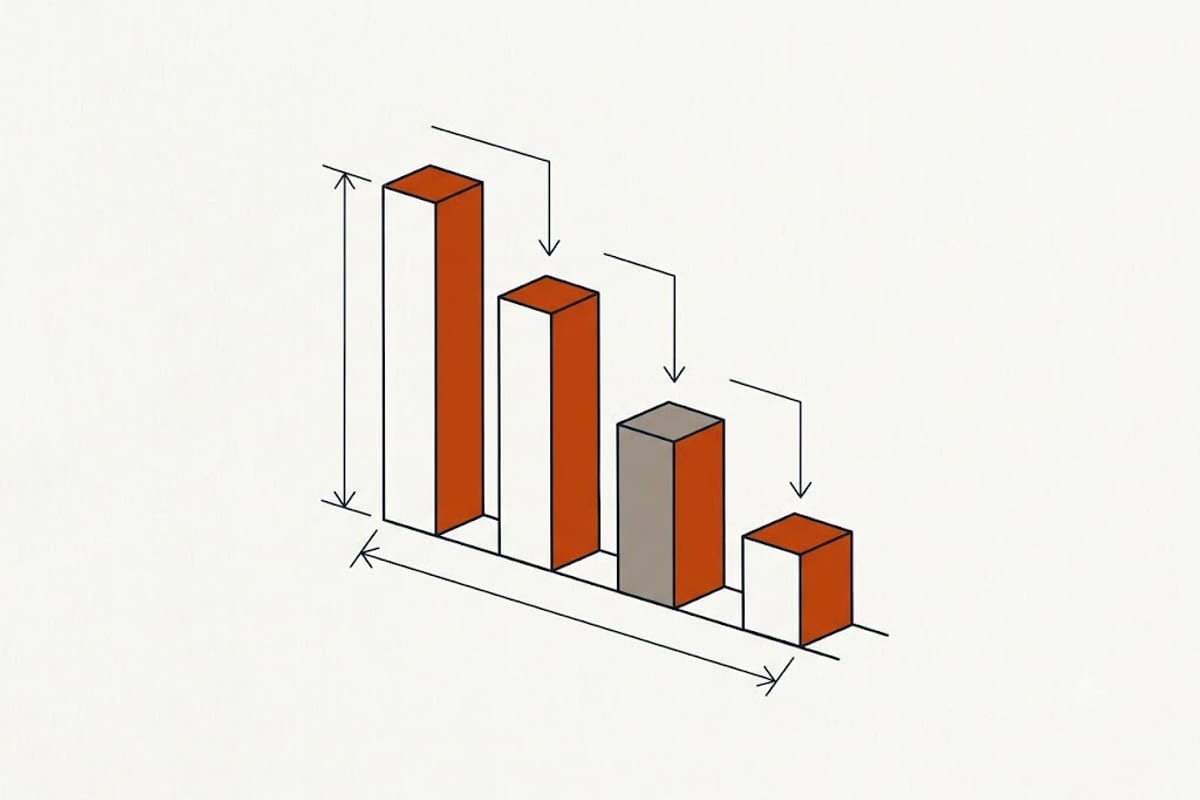
The equipment lasts 15 to 20 years. Read that table against that number and the picture is blunt: in hot climates the upgrade pays for itself comfortably; in northern ones it does not pay back within the life of the machine.
SEER2 is not the same scale
Since 2023 equipment is rated in SEER2, tested against higher external static pressure — closer to how systems behave on real ductwork. SEER2 numbers run roughly 4.5% lower than the old SEER for the same equipment.
A 14 SEER unit is about 13.4 SEER2. So "14 SEER" in an old article and "14 SEER2" on a new label are not the same machine, and comparing across the two scales overstates the newer unit.
The reason to buy the upgrade anyway
Higher-efficiency units are usually two-stage or variable-speed, and that changes how the house feels rather than what it costs.
A single-stage unit is either off or at 100%. A variable-speed unit runs at 40% for long stretches, which removes far more moisture and holds the temperature within a degree instead of three. In a humid climate that comfort difference is worth more than the electricity — and it is the honest reason to spend the money in a mild climate where the payback never arrives.
What SEER does not measure
SEER is a seasonal average computed from a test procedure. Three things it says nothing about:
Humidity removal. Two units with identical SEER can behave very differently in a humid climate, because SEER measures sensible cooling efficiency, not moisture removal. A variable-speed unit running long and slow strips far more water out of the air than a single-stage unit of the same rating.
Performance on the hottest days. The rating is weighted toward mild conditions, where equipment spends most of its hours. Capacity and efficiency at 105°F — the afternoons you actually notice — are a separate figure called EER2, and it is the more useful number in a hot dry climate.
Your installation. A high-SEER unit on leaky ducts, with an oversized coil and a strangled return, delivers nothing like its rating. Field studies routinely find installed performance well below the label, and the gap is almost entirely installation quality rather than equipment.
Do not forget the tax credit
Federal energy-efficiency credits and utility rebates frequently cover a meaningful share of the step up, and they change the arithmetic more than the electricity does. Check what applies in your state before choosing the tier — a rebate can make the higher-efficiency unit the cheaper purchase outright, at which point the payback question stops mattering.
Three things that beat the SEER upgrade on return
Sealing the ducts. If a quarter of the cooled air is leaking into the attic, no efficiency rating recovers it. Duct sealing typically costs less than the SEER step and saves more.
Getting the size right. An oversized high-efficiency unit performs worse in practice than a correctly sized standard one, because it never runs long enough to dehumidify.
Attic insulation and air sealing. Reducing the load is always cheaper per dollar saved than improving the machine that serves it — and unlike the equipment, it does not wear out in fifteen years.
The short version
- Zones 1–3, long cooling season: the upgrade pays back and is an easy yes.
- Zones 4–5: marginal on energy alone. Buy it for the two-stage comfort, or not at all.
- Zones 6–7: it will not pay back. Put the money into the envelope or into a better heating system.