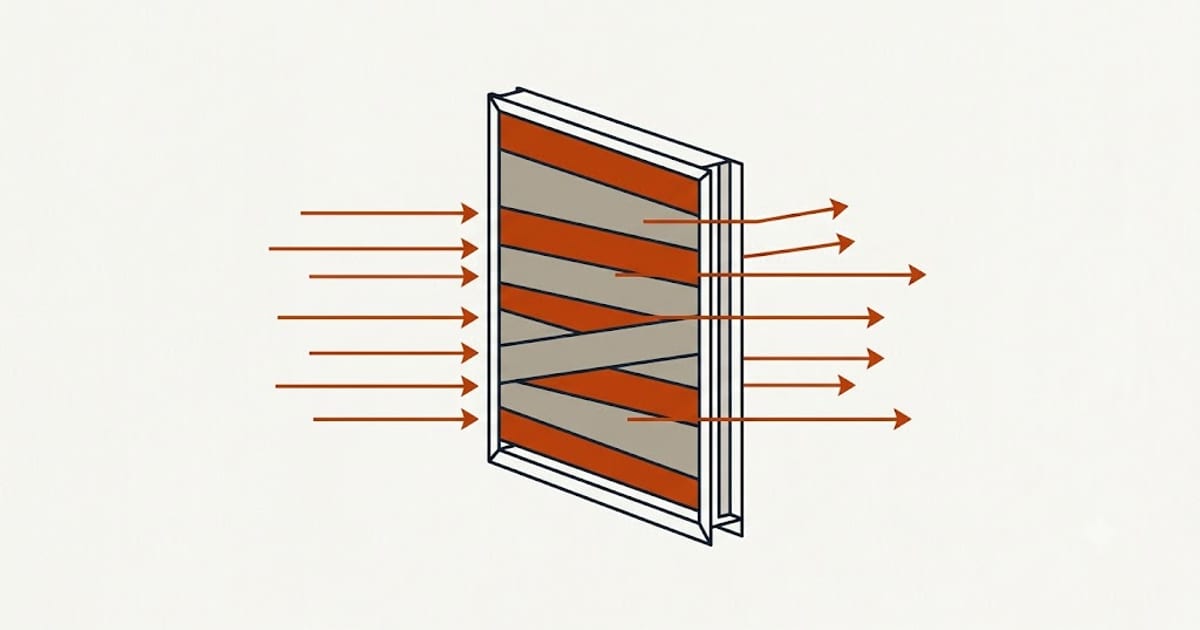
Equipment capacity is rated at a specified airflow. Deliver less air and the system delivers less cooling, regardless of the tonnage on the nameplate.
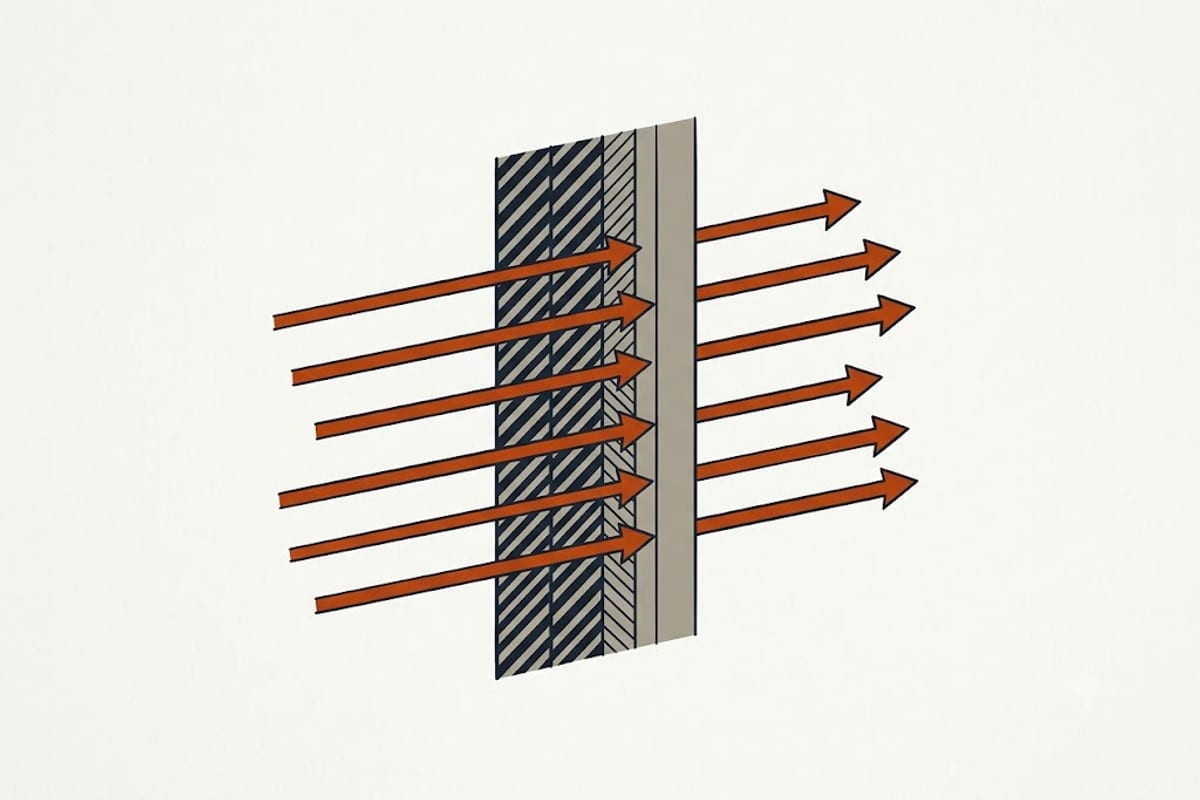
The rule
400 CFM per ton is the standard design airflow. A three-ton system is designed around 1,200 CFM.
The usual working range is 350 to 450 CFM per ton, and where a system sits in that range is a deliberate choice:
350 CFM per ton — colder coil, more moisture removal. Preferred in humid climates.
400 CFM per ton — the default.
450 CFM per ton — warmer coil, more sensible capacity, less dehumidification. Suited to dry climates.
What happens below the range
Too little airflow means the coil runs colder than intended.
Capacity falls. A system at 300 CFM per ton delivers noticeably less than its rating.
The coil can freeze. Below the dew point is useful; below freezing turns condensate to ice, which blocks airflow further and accelerates the problem. A block of ice on the indoor coil is the classic low-airflow symptom.
The compressor can see liquid refrigerant returning, which is the failure mode that ends compressors.
What happens above the range
Poor dehumidification, because the coil never gets cold enough to condense much water.
Noise at the registers.
Reduced latent capacity exactly when a humid climate needs it.
Common causes of low airflow
A dirty filter, which is the first thing to check and a large fraction of all cases.
A restrictive filter. A dense high-MERV filter in a filter slot sized for a cheap one can add substantial resistance. Filtration is worth having; the filter area has to be sized for it.
Undersized return ductwork, which is extremely common. Returns are frequently sized generously less carefully than supplies, and the return side is where most restriction lives.
Crushed, kinked or over-long flexible duct.
A dirty evaporator coil or blower wheel.
The wrong blower speed tap selected at installation.
Too many closed registers. Closing vents in unused rooms does not save money on a standard system; it raises static pressure and reduces total airflow.
How it is measured
Static pressure across the air handler, using a manometer at the supply and return. Most residential equipment is designed for a total external static pressure of about 0.5 in. w.c.; field measurements frequently find 0.9 or higher.
Temperature split across the coil — the difference between return and supply air. Roughly 18 to 22°F at typical conditions. A larger split suggests low airflow; a smaller one suggests low capacity or high airflow.
Direct airflow measurement with a flow hood or a TrueFlow plate, which is the definitive method.
Why this belongs in a sizing discussion
A system that cannot get its rated airflow cannot deliver its rated capacity. Sizing up to compensate is a very expensive way to work around a duct restriction that costs far less to correct.
It is also why commissioning data matters. Ask for measured static pressure and airflow after installation. If the static pressure is well above design, the ductwork needs attention and the equipment will never perform as specified.
The homeowner's version
Change the filter on schedule and use the filter the equipment was set up for. Keep registers open. Keep the outdoor coil clear of leaves and shrubbery.
Those three cover a large share of real-world airflow problems, and none of them requires a technician.
Ductless equipment is a different case
Mini-splits move air directly into the room without ductwork, so the external static pressure the blower faces is close to zero.
That is why their efficiency ratings look so strong beside ducted equipment under the same test procedure, and it is why the airflow problems described here largely do not apply to them. The equivalent failure on a ductless head is a dirty filter or a blocked outdoor coil, both of which the owner can check.
What to ask after an installation
Request the measured total external static pressure and the measured airflow, in writing.
If static pressure is well above the equipment's design figure, the system will never reach its rated capacity no matter how good the equipment is, and the fix belongs to the ductwork rather than the condenser.