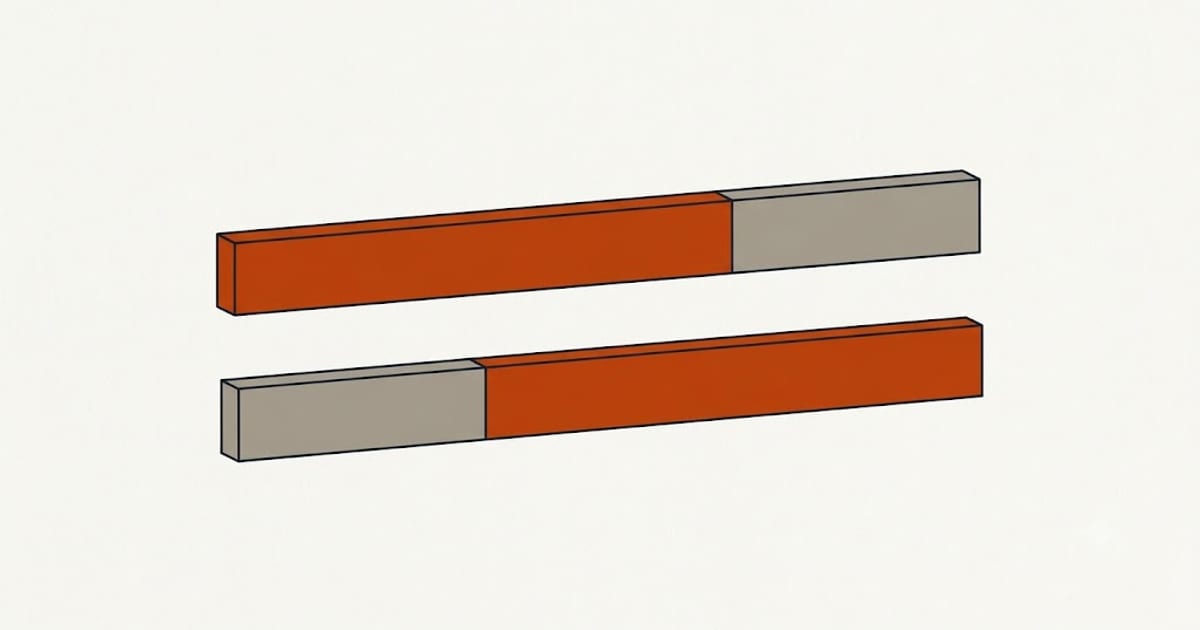
Cooling has two jobs. Lowering air temperature is sensible cooling; removing moisture is latent cooling. A ton of capacity is divided between them, and how it divides is a property of the climate and of the equipment.
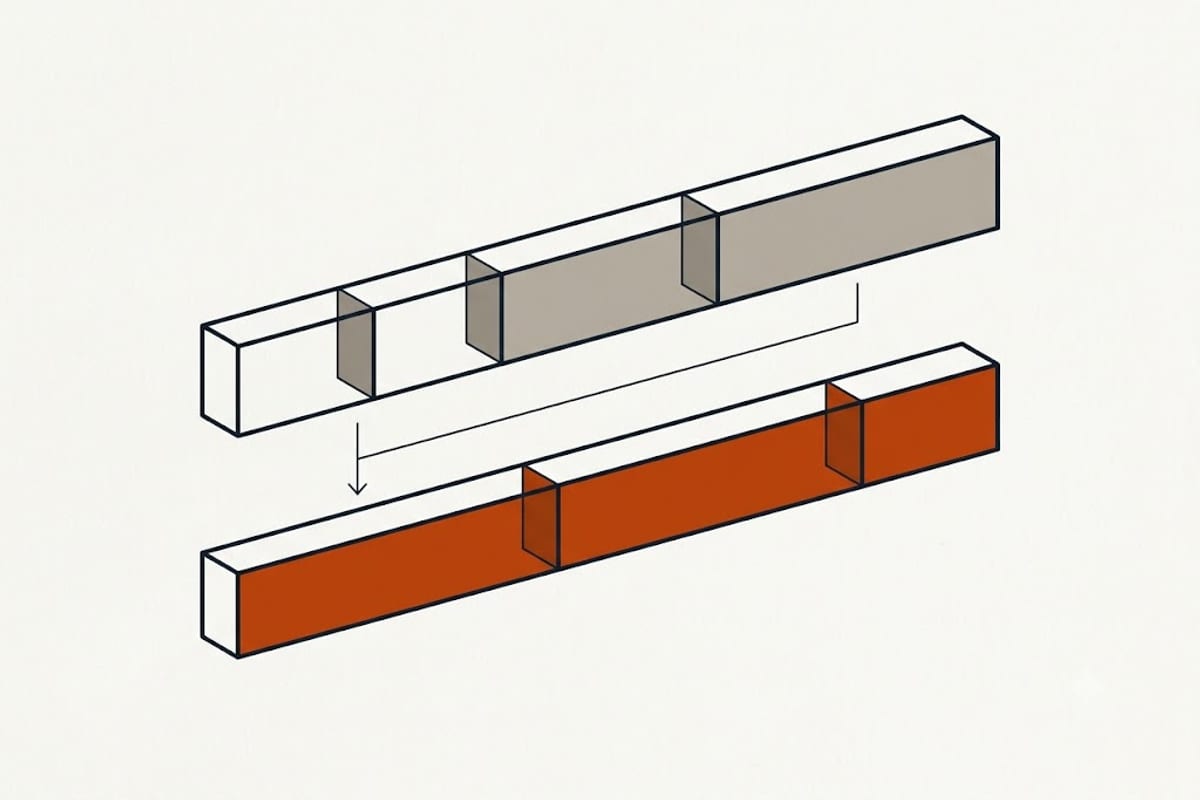
Sensible heat ratio
SHR is the fraction of a system's total capacity that goes to lowering temperature. A unit with SHR 0.80 spends 80% of its capacity on temperature and 20% on moisture.
Equipment is published with an SHR, and it varies with airflow, coil temperature and outdoor conditions.
The match between the equipment's SHR and the house's load ratio is what determines whether the house ends up comfortable.
Dry climates
Latent load is minimal. Almost the whole requirement is sensible.
Select high SHR. Higher airflow across the coil raises SHR, so a dry-climate system typically runs closer to 450 CFM per ton rather than the standard 400.
Evaporative cooling becomes a genuine alternative, since it works by adding moisture — precisely what a humid climate cannot tolerate.
Oversizing is still undesirable, but its consequences are milder because there is little moisture to fail to remove.
Humid climates
Latent load can reach 30% or more of the total, and it does not go away at night or on a cloudy day — infiltrating outdoor air brings moisture continuously.
Select lower SHR and, more importantly, prioritise run time. Lower airflow — around 350 CFM per ton — makes the coil colder and condenses more water.
Oversizing is the dominant failure mode here. A system that satisfies temperature quickly and stops leaves the moisture behind, and the house is cold and damp at the same time.
The complaint that identifies the problem
"The thermostat says 72 but it feels sticky."
That is a latent capacity problem, and adding tonnage makes it worse. The correct responses are longer run times, lower blower speed, a smaller or modulating system, or dedicated dehumidification.
Measure indoor relative humidity before doing anything. Above 55% in summer while the system is meeting setpoint confirms it.
Equipment choices that follow
Variable-capacity systems are strongly favoured in humid climates because they run continuously at low output, which is the best condition for moisture removal.
Whole-house dehumidifiers address latent load directly and independently of the thermostat, which is genuinely useful in a house that is already oversized or that has a large latent load from other sources.
Enhanced dehumidification modes, available on many modern systems, slow the blower when humidity is high, trading a little sensible capacity for latent.
Where the map is not simple
Coastal and inland conditions within one region differ substantially, and a marine climate can be humid without being especially hot — which produces a house that needs dehumidification more than it needs cooling.
Mixed climates see both conditions across a season, which is another argument for equipment that can modulate rather than equipment optimised for one extreme.
The one rule that transfers everywhere
Size to a real load calculation that separates sensible from latent, and select equipment whose published capacities at local design conditions cover both.
An equipment selection that shows total capacity only, without the sensible and latent split, has not been checked against the half of the load that people actually notice.
Where the moisture is coming from
Before adding dehumidification capacity, it is worth knowing the source.
Infiltration of humid outdoor air, which is what air sealing addresses. Occupant activity — showers, cooking, laundry — which is what exhaust ventilation addresses. A crawl space or basement open to the house, which can be the largest single source and is fixed by encapsulation rather than by anything at the air handler. Duct leakage in a humid attic, which brings outdoor moisture in continuously.
A house with an unencapsulated crawl space can have a latent load large enough that no equipment selection resolves it, and the money is better spent below the floor than at the condenser.
Ventilation adds latent load deliberately
Modern tight houses need mechanical ventilation, and in a humid climate that means bringing in outdoor air that carries moisture.
An ERV transfers part of the humidity back out with the exhaust stream, which is why it is preferred over an HRV in the Southeast. Either way, the ventilation rate belongs in the load calculation — it is a design decision that adds to the latent requirement rather than an incidental.