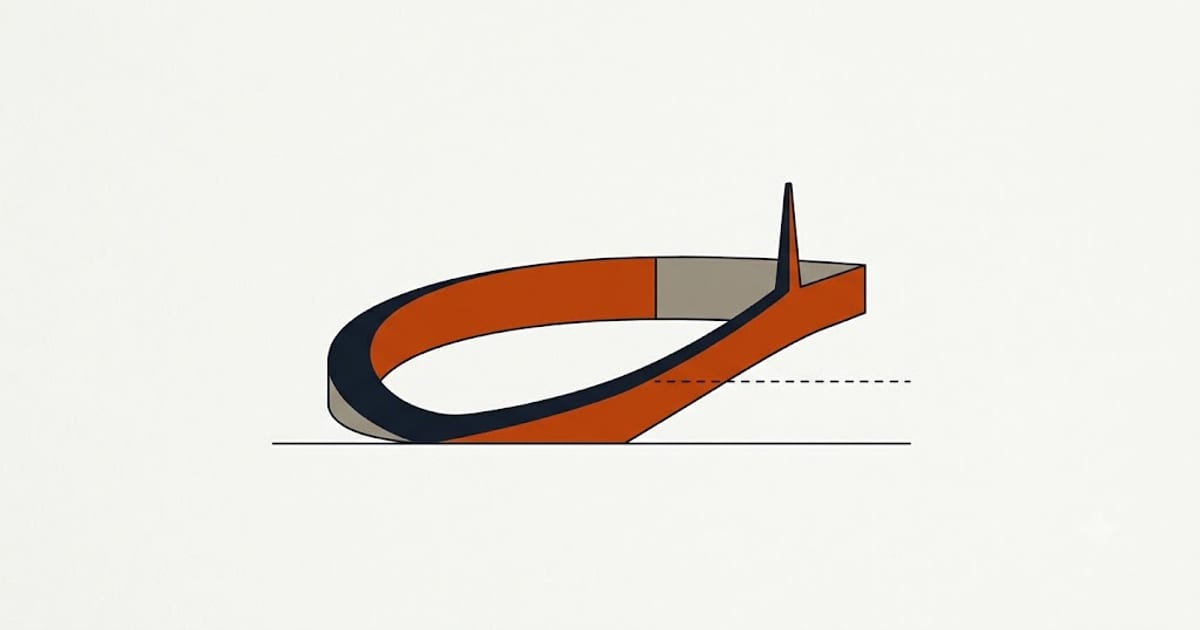
Every air conditioning system in the United States is sized to a design temperature, and that temperature is deliberately not the hottest it ever gets.
The convention is the 1% design dry-bulb: the temperature exceeded during 1% of the hours in a typical year — about 88 hours, spread across the worst afternoons of the summer. Equipment is chosen to hold the indoor setpoint at that outdoor temperature and no higher.
So falling behind is the design working
If your design temperature is 95°F and the day is 103°F, the system will run continuously and drift a few degrees above setpoint. Nothing is broken. It is doing exactly what it was specified to do.
The alternative — sizing for the record high — means equipment substantially larger than the house needs for the other 8,672 hours of the year. That unit short cycles all summer, never dehumidifies properly, and costs more to buy and to run. The house would be less comfortable for three months in order to be comfortable for three afternoons.
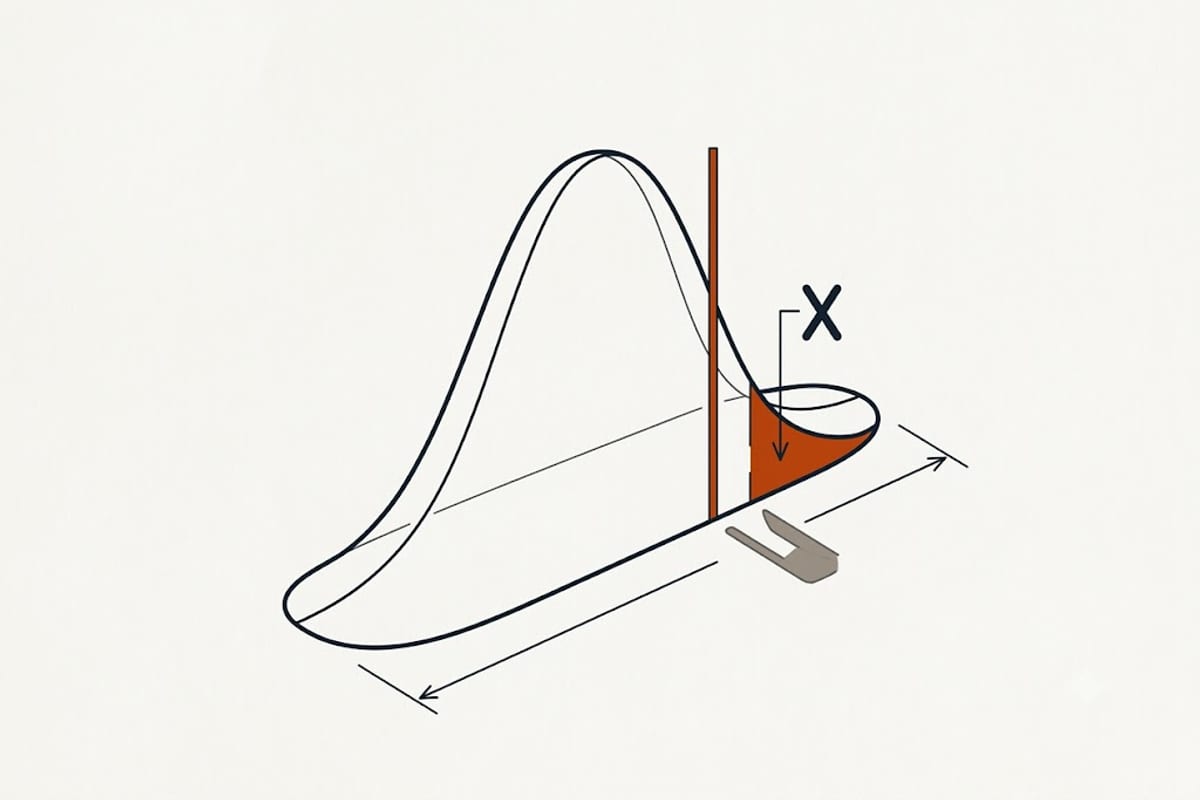
Typical 1% design temperatures
| Place | 1% design dry-bulb |
|---|---|
| Phoenix, AZ | 108°F |
| Houston, TX | 96°F |
| Atlanta, GA | 93°F |
| Chicago, IL | 91°F |
| Minneapolis, MN | 90°F |
| Seattle, WA | 83°F |
Notice how little the design temperature varies compared with how much the cooling load varies. Minneapolis and Houston are six degrees apart on this measure, but Houston runs its system four times as many hours. That is why climate zone changes the tonnage far less than it changes the annual bill.
How to tell design behaviour from a real fault
It is the design if:
- it only happens above roughly your area's design temperature,
- the house recovers overnight and holds fine the next morning,
- the temperature split across the coil is still 16–22°F,
- and it has behaved this way since installation.
It is a fault if:
- it cannot keep up at 85°F,
- it has got worse year on year,
- some rooms are far worse than others,
- or the split across the coil has narrowed.
That last one is the most useful single measurement. If the air leaving the registers is only 8 or 10 degrees cooler than the air entering the return, the system has lost capacity — and the cause is airflow or refrigerant, not the weather.
What actually helps on the worst days
Shade the west glass. Late-afternoon sun through unshaded west windows is frequently the largest single load in the house on exactly the days it matters. External shading, or even closed blinds, moves more than most equipment changes.
Precool the house. Drop the setpoint two degrees in the late morning while the load is still manageable. The structure holds that coolness into the afternoon, and the system starts the hard part from ahead rather than behind.
Seal the attic ducts. Attic temperatures reach 130–150°F on those days, so duct leakage and duct heat gain are at their worst precisely when capacity is scarcest.
Do not touch the thermostat downward. Setting it to 65°F does not make the system work harder — it has one speed, and it is already at it. All it does is guarantee the unit never shuts off.
When more capacity is genuinely the answer
If the house has changed since the equipment was sized — an addition, a finished attic, west-facing glazing replaced with more of it, or a conservatory — then the load is no longer the load the system was chosen for.
That is a Manual J question, not a thermostat question, and it is the one case where the honest answer is a larger system.