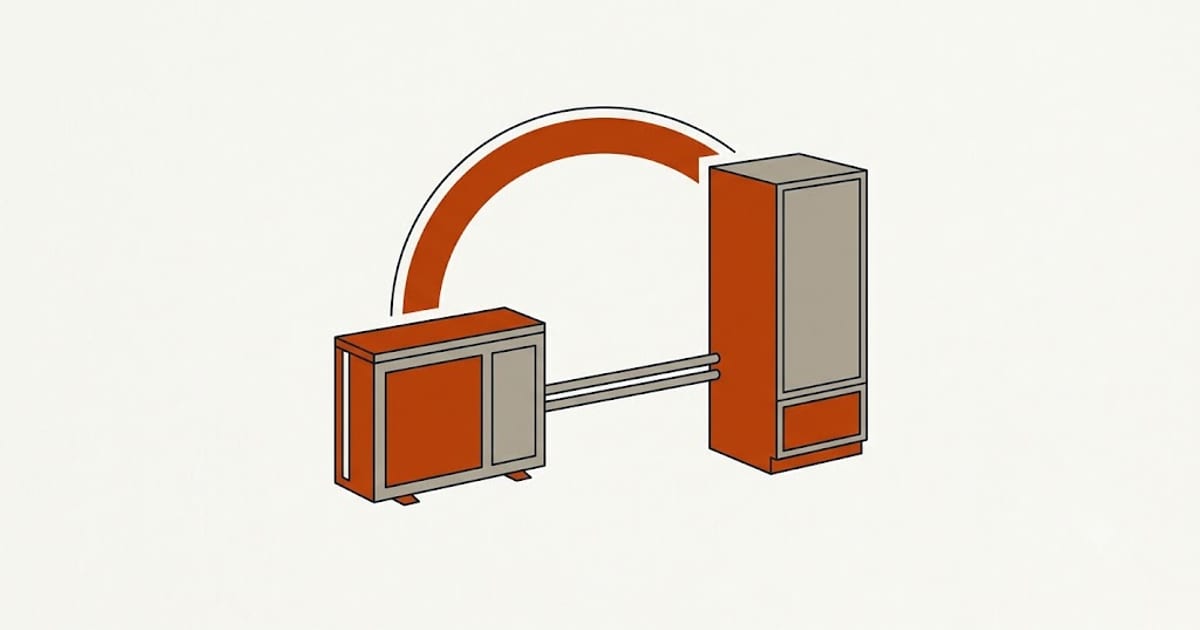
An air conditioner that runs and runs without bringing the temperature down is not failing to try. It is moving heat out of the house at a lower rate than heat is coming in, and there are only a handful of places that happens.
They are listed here cheapest first, which is also roughly most likely first.
The two-minute test that halves the problem
Feel the two copper lines at the outdoor unit while the system runs.
- The large insulated line should be cold and sweating. If it is warm or dry, refrigerant charge or the compressor is involved.
- The large line frosted over, or ice on the indoor coil, means airflow — almost always.
Then go to a supply register and feel the air. It should be roughly 16–22°F cooler than the air at the return. Much less than that with good airflow points at refrigerant; much more than that with weak airflow points at restriction.
That single pair of observations separates the cheap causes from the expensive ones.
1. The filter
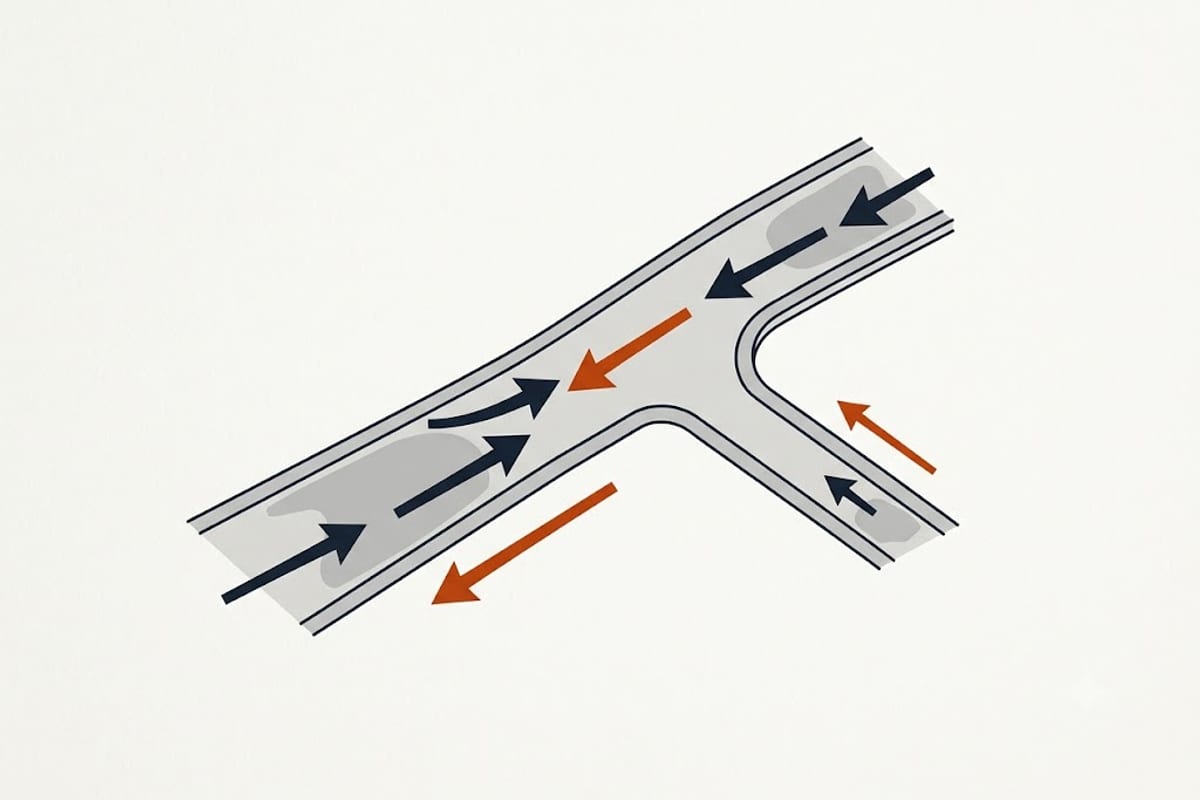
Obvious, and still the most common answer. A restricted filter starves the coil of air, so the refrigerant does not absorb the heat it was supposed to, and eventually the coil drops below freezing and ices over — at which point airflow stops entirely.
A 1-inch MERV 13 filter costs 0.45 inches of water column on its own, which is nearly the entire pressure budget of a residential blower before the air has gone anywhere. If somebody upgraded the filter grade recently and the problem started, that is the cause.
2. A dirty outdoor coil
The outdoor unit rejects the heat. Blanket it in cottonwood seed, grass clippings or dryer lint and it cannot. The symptom is exactly this one: runs constantly, cools weakly, and the discharge air at the top of the unit is unusually hot.
Shut the power off at the disconnect and rinse the fins from the inside outward with a garden hose. Two feet of clearance on all sides, and nothing planted against it.
3. A dirty indoor coil
Less visible and more damaging. Dust that gets past a poor filter cakes onto the evaporator fins and insulates them. The coil cannot absorb heat, the air cannot get through, and both failures compound.
This needs a technician; it is not a filter change.
4. Duct leakage in the attic
If a third of the cooled air is being delivered to the attic through unsealed joints, the system is working correctly and the house still will not cool. Attic duct leakage is common, invisible, and worst on the hottest days when the attic is at 140°F.
The clue is a system that keeps up in mild weather and falls apart above about 90°F.
5. Low refrigerant charge
Air conditioners do not consume refrigerant. If the charge is low there is a leak, and adding more without finding it means paying for the same repair every summer.
The symptoms are a warm or dry suction line, a small temperature split across the coil, and often ice forming at the metering device. This is a technician job and the diagnosis should include locating the leak, not just topping up.
6. The system is simply undersized for the day
Every system is sized for a design temperature — roughly the hottest 1% of hours in an average year. On the two or three days above that, a correctly sized unit runs continuously and falls slightly behind. That is not a fault; it is the design working as intended.
The tell is that it only happens on the very hottest afternoons and the house recovers overnight.
What it is usually not
An undersized unit, in general. Oversizing is far more common than undersizing, because contractors have rounded up for decades. And an oversized unit produces the opposite symptom — short cycles, cold and clammy air — rather than continuous running.
If the system genuinely cannot keep up in ordinary weather, get the static pressure measured before anyone quotes new equipment. A strangled system and an undersized one feel identical from the sofa and cost very different amounts to fix.